Tuesday, 15 July 2014

Top ten foods to try in Sri Lanka


Being a big time foodie, I thought it was about time for this post! I have a confession though, although the title says 10 foods to try, I’ve got 12! In my defense, there are so many super tasty things to eat here, it was difficult to shorten the list any more. 

Before we begin, you should know that there are loads of amazing things to try when you visit Sri Lanka. This list of Sri Lankan [ish] foods consists of my personal favourites and they are in no particular order.

1) The obvious – Rice and Curry
There is no way that you would miss out on this staple meal while in Sri Lanka. Rice is a huge part of our history and culture. ‘Rice and Curry’ is a very broad title as there are so many different varieties and variations of dishes, whether they be rice, vegetables, sea food or meat. ‘Parrippu’ which you might know as dhal or lentils, chicken curry and fish ‘ambul thiyal’ are a few of my long list of favourites…

Rice and Curry

2) Hoppers
Hoppers could be either egg or plain, and for me, the crispier the better! It’s most often eaten with curries and ‘seeni sambol’ or ‘katta sambol’ or if you’re someone like my mom, you’d probably have hoppers with butter and treacle or juggery as well!

Egg and plain hoppers

3) String Hoppers
Aside from its name and the fact that you eat it with curries, string hoppers have nothing in common with hoppers! It’s another one of my dinner time favourites.

A plate of string hoppers, parippu and pol sambol

4) Koththu Roti
Koththu is a Sri Lankan modification of ‘Godamba’ Roti, where it’s sliced and diced [to a catchy beat] and mixed with veggies and meat. Tasty, a cafĂ©-restaurant has some really good [and not too spicy] koththu… or you could try the cheese koththu at Pilawoos. It’s the best after a big boozing night. The best part is that it’s open all night! Approach it with caution though; it’s only for those whose stomachs can handle it!

Chicken Koththu

5) Sri Lankan Chinese food
Yes, there is something like that! It doesn’t taste a thing like the food you will eat in China… But, that doesn’t mean that it’s any less of a mouth-watering culinary experience. Try the Hot Butter Cuttlefish… it’s crispy and delicious and ideal for a drink time snack as well!

Hot Butter Cuttlefish at the Chinese Dragon Cafe

6) Pani Pol Pancakes
Another brilliant modification of food from another culture! Pani pol translates to treacle-coconut. These are delicious thin pancake rolls stuffed with a fried mixture of treacle and grated coconut. It tastes as good as it sounds!

A fresh batch of PPP's!

7) Sea Food
Being an island, Sri Lanka is famous for its seafood, which is not as expensive as it is in other countries. Whether it’s curried, grilled, baked or fried; crab, prawn, cuttlefish or fish; it’s bound to be the meal you will spend the longest time eating! Try The Manhattan Fish Market or The Lagoon for some really good seafood. Or, if you want a place that’s slightly cheaper and not as fancy, Beach Wadiya is a popular amongst travellers. If you’ve got your eye on crab and crab alone, I’d recommend The Ministry of Crab or the The Fat Crab which is slightly cheaper.

My mom's homemade crab curry!

8) Festival Food
These goodies come out during festivals and other important functions and occasions and are usually set on a decorated table alongside other traditional foods such as milk rice. The most common ones are kavum, mung kavum and kokis.


Kokis

9) Chips or ‘crisps’ if you’re British!
And no, not the potato kind… these are far better. You should definitely try Manyokka Chips while in Sri Lanka. It’s made out of Cassava or Maniyok. You could find packs in supermarkets, or buy some from a street vendor; the chances are that it will be tastier if you do so! Another type of chip that is a ‘must try’ are Del Chips which are made from breadfruit. It’s not available all year round… and I don’t actually know where you can buy them [someone should really get on that!]. It’s usually homemade, but if they are in season, I could fry some for you!

Fried and spiced to perfection!

10) Short eats
I actually had to google and check if ‘short eats’ was the word that was used globally to describe this type of food… and it wasn’t! Shorts eats are a variety of tea time like snacks which are usually pastries and rolls etc. Check out Jehanr’s harlem shake video with Sri Lankan short eats!


11) Devilled Chicken… or fish… or anything, really!
It’s a popular and kind of spicy bite that’s often had during ‘drinking sessions’.

Devilled Pork

12) Lamprais or lumprice!
This is something amaziag that was left behind by the Dutch from when they had Sri Lanka as a colony. It’s a wonderful meal, wrapped in a banana leaf. In my opinion, you can find the best Lamprais at The Dutch Burgher Union, The Dutch Grocer, Fab and Green Cabin.

A Lumprais pack

The inside of a Lumprais pack


Don’t limit yourself to just this list though, because I had to cut it down. Try everything that comes your way!

“If you reject the food, ignore the customs, fear the religion and avoid the people, you might better stay at home” – James Michener


Wednesday, 11 June 2014

Sri Lankan Weddings

You are bound to come across many decorated cars this month as the June Bride’s take center stage! Like the rest of the world, June is a popular month for weddings in Sri Lanka. But unlike most Western countries, this is not because it’s the summer time [Sri Lanka has an amazing all-year-round summer], it’s because couples are given an auspicious time or ‘nakath’  for their wedding by an Astrologer, which most often falls in June.

There are many different types of weddings and traditions in Sri Lanka. Some follow the old traditions very carefully, some don’t follow them at all and some have a mixture of Sri Lankan, Western and their own unique traditions. One of the more unusual weddings I went to last year was a beach wedding where the Bride walked down the aisle to the Star Wars ‘Imperial March’ which is more commonly known as ‘that Darth Vadar soundtrack’ and had chocolate cake with mint icing in a jar instead of the usual fruity wedding cake!

Cake in a jar...! Genius!

All the traditions and rituals followed at a wedding depend mostly on the race and religion of the couple. If the Bride and Groom are of two different religions, they choose either one type of ceremony, have two separate ceremonies [this happens more than you would think!] or have a hybrid ceremony with traditions that stem from both religions.

There are four main types of weddings in Sri Lanka; the Buddhist ‘Poruwa’ ceremony, the Hindu ‘Vivaah Sanskar’, the Muslim ‘Nikkah’ and the Christian Church wedding.


The Buddhist ‘Poruwa’ Ceremony

Everything at this ceremony is done according to a specific auspicious time. Once they arrive, the Bride in a white saree and the groom in a ‘thum-pottiya’ [or a suit, if it’s a more modern wedding] they are escorted by drummers and Kandyan Dances to the ‘Poruwa’ which is a platform that is decorated with flowers.
A traditional Poruwa

A modern Poruwa ceremony

The Poruwa ceremony is conducted by a person called the ‘Ashtaka’ and the activities in the ceremony vary from one part of the country to the next. During the ceremony, betel leaves are offered in various ways for the protection of future generations and also in memory of past generations. The groom then gifts a necklace to the bride and they exchange rings. The Bride and Groom’s little fingers are then tied together in gold thread and ‘pirith pan’ or holy water is poured over it to symbolise the unity.  Then the ‘Jayamangala Gatha’ which is a Pali verse of Lord Buddha’s auspicious victories is sung.

Tying the little fingers together

The couple then steps down from the Poruwa together and a coconut is broken as a gesture to ward off evil spirits. They then place their signatures on the marriage registrar along with two witnesses, light the brass oil lamp, to symbolise a bright future together and cut the wedding cake. This is then followed by reception. The Bride then changes into a red sari and leaves the reception with the Groom.

The lighting of the lamp

The Hindu ‘Vivaah Sanskar

The Hindu ceremony is very similar to the Poruwa ceremony in many ways and everything is done according to an auspicious time. A few weeks before the wedding day, the ‘Ponn Urukku’ ceremony takes place where the groom presents a gold coin to be melted and made into a Thaali – the Bridal Pendant.

The wedding commences when the Groom arrives and is welcomed by the Bride’s family and lead to the nuptial seat which is adorned with flowers after the two ladies perform ‘Aarathi’ to ward off the evil eye with banana wick lamps on a tray. The priest then performs a prayer before the Bride enters dressed in a coloured saree, adorned with a lot of jewelry and with flowers in her hair. Then the ‘Kannika Thanam’ is performed which is the act of giving away the Bride. Her parents indicate consent with symbolic gestures and the Groom’s parents then accept a gold coin to signify the acceptance of the Bride. Then the Thaali [necklace] is blessed by the Priest and the elders of the family and is presented to the Bride as the Groom welcomes her to the family. The Thaali ceremony, an important part of the Hindu wedding, is when the Groom ties the Thaali around the Bride’s neck and places a Kunkum-Pottu on her head as a shower of flowers blesses the couple and a coconut is cracked in half.

The couple then exchange garlands and the Priest and the close relatives of the couple bless them by showering them with rice, symbolising happiness, prosperity and fertility. Finally, the ceremony ends with the wedding feast or ‘Virunthupasaram’.

The couple exchanging garlands

The Muslim Nikah

The customs at a Muslim wedding differ from one community to the next. A few days before the wedding, a Mehendi ceremony takes place where the Groom’s family visits the Bride’s family and the women decorate their hands with Mehendi. The Bride’s family also make a gold necklace called the Shawadi before the wedding date.

Mehendi

The Nikah is done either at the Mosque or at the reception where the Groom and the father of the Bride register the marriage. The Groom then offers the Bride a ‘Mahr’ which is a gift [usually money or jewellery], puts the wedding ring on her finger and presents to her a gold chain [the Shawadi]. They then cut the wedding cake and sit down for a meal at the reception.


The Christian Church Wedding [in Sri Lanka]

In this marriage ceremony, the Bride, either in a white saree or a dress and wearing a veil is walked down the aisle usually to the sound of the wedding march by her father and is ‘given away’ to the groom who stands at the altar. The Priest then prays for the couple and reads out the vows that the couple agree to. The wedding rings which are blessed by the Priest are then exchanged and the Groom places a necklace on the Bride. They then register the marriage and walk down the aisle together. The reception usually takes place in a hall after the Church ceremony.

Walking her down the aisle


There are several traditions in all these different types of Sri Lankan Weddings that remain the same. Such as the Bride’s father ‘giving her away to the groom’. In Poruwa ceremonies and Vivaah Sanskar’s this is done when he places the Bride’s hand over the Groom’s. In the Nikah, it is when he signs the registry with the Groom and in the Church wedding it is when he walks her down the aisle. But the most ‘Sri Lankan’ feature in all these ceremonies is when the Groom presents a chain to the Bride and places it on her neck… 


Friday, 11 April 2014

Sri Lankan New Year

Although it’s technically referred to as the Sinhalese and Tamil New year, I prefer to call it the Sri Lankan New Year because it is celebrated not just by Sinhalese and Tamil people but by most Sri Lankans. ‘Aluth Avuruddha’ as it is called in Sinhalese is celebrated on the 14th of April each year. It is an astrologically significant day and also marks the end of the harvest season. Like most other traditional celebrations in Sri Lanka, we have loads of very specific, unique and sometimes somewhat strange customs and traditions that are upheld on the New Year day and a few days before and after it.

Everyone knows when the Avurudu Season comes along when they hear the sound of the Koha. The Koha is a type of cuckoo bird called the Asian Koel. The mating season of the Koha coincides with the New Year Season, and therefore Sri Lankans consider the mating call of the Koha to be like an announcement that the New Year is coming!

The Asian Koel

Unlike the dawn of the New Year on the 1st of January, where the old year ends on the 31st of December at midnight and the New Year starts immediately after, the dawn of the Sri Lankan New Year occurs hours after the end of the old year. These are auspicious times and are different each year. There is a period called the ‘Punya Kaalaya’ that starts with the ending of the old year, which is a neutral period where traditionally Sri Lankans refrain from material pursuits and engage in religious activities. This period is also often referred to as ‘Nonagathe’ which means period of no auspicious time. This year, that period is from 1.13 AM to 2.01 PM on the 14th of April. The New Year dawns during this period at 7.37 AM.  

Confused yet? Wait, there’s more!

There is an auspicious time [10. 17 AM this year] when Sri Lankans boil milk in a clay pot on a wood fire until it froths to the top and overflows. This signifies an abundance of success in the upcoming year. They then start preparing the meal for the New Year.  This meal however cannot be consumed until 11.05 AM because we Sri Lankans have an auspicious time for everything! Other customs like lighting the oil lamp and eating Sri Lankan Kavili like Kavum [an oil cake] and Kokis [a crispy sweetmeat] are done at this time as well. It is after this that the celebrations begin in each town with traditional games and ladies playing the Rabane, a large round drum. People also go around to all of their relative’s homes to wish them a Happy and Prosperous New Year.

Kavum

Kokis
Other Sweetmeats
Ladies playing the rabane

The traditional games are fun to take part in and even more fun to watch! Here are a few of them:

Kana Mutti – Where the contestant is blindfolded and given a pole to hit one of the clay pots that are hanging on a string. Kind of like a piñata, but not really! The clay pots are usually filled with water, flour or toffees and the crowd usually backs away from the blindfolded contestant to avoid being sprayed or having the pole being swung at them!


Banis Kama – Which translates to ‘eating buns’, is a game where the contestants kneel in front of a bun hanging on a string and compete to be the first to finish eating it without using their hands!


Kotta Pora – This one’s kind of like a pillow fight, but you are seated on a log and you must try and whack your opponent off the log with a very hard pillow using only one hand to win!


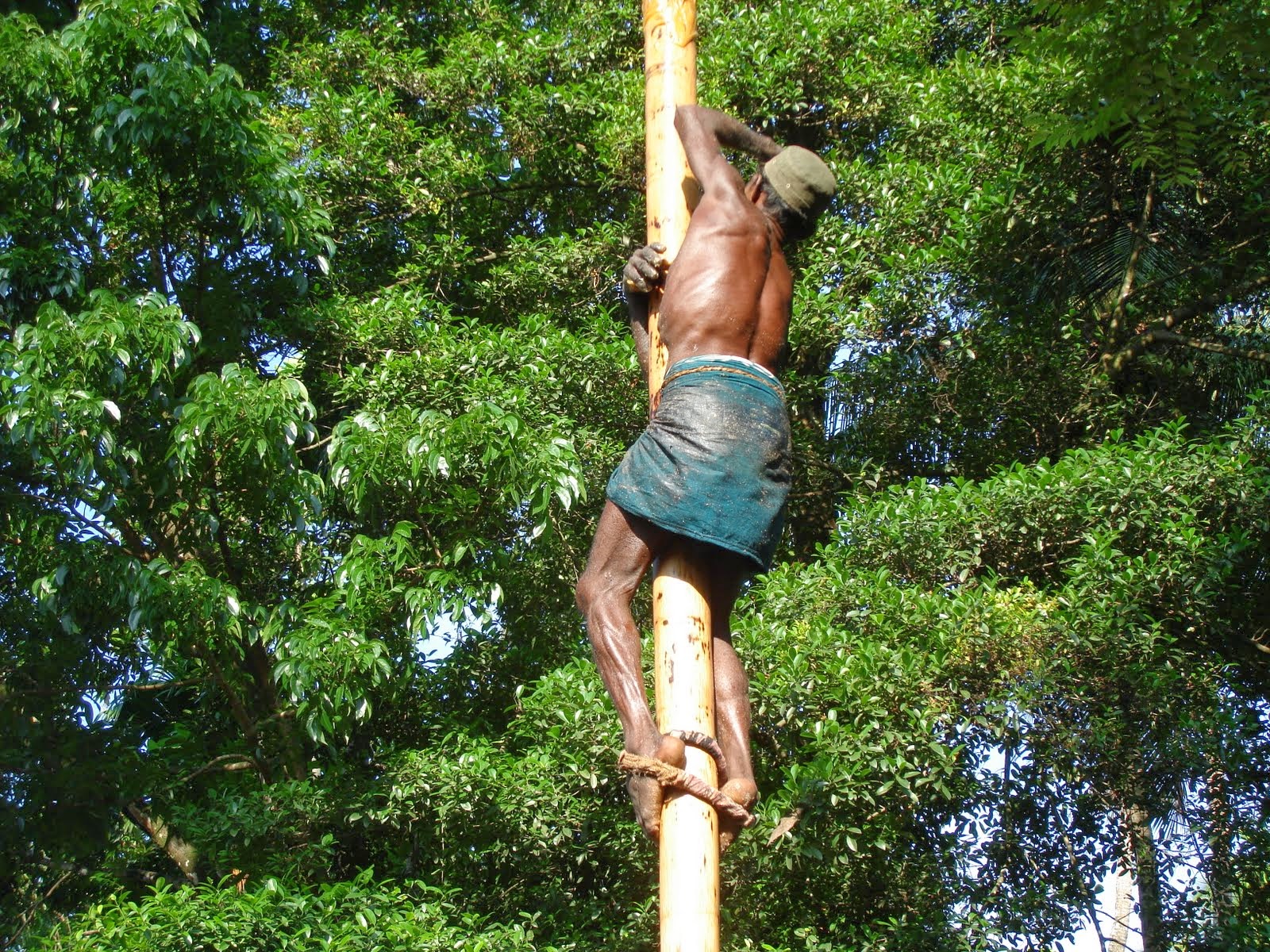
There are more bizzare games as well, like the one where a blindfolded person must be the first to finish feeding their partner yogurt or curd and the one where the person that manages to climb furthest up a greasy pole wins. There are also lime and spoon races, draw the eye on the elephant, gunny bag races, tug of war and the egg toss where you keep throwing an egg to your partner and catching it when they throw it back. You keep taking a step back after every round and the last team standing without having dropped or broken the egg wins!

Yogurt Feeding - Always messy!

Climbing up the greasy pole
Gunny Bag Race

The Egg Toss - I usually avoid this one!!
If you think that the Avurudu Traditions end there, you’re wrong! There are two other main customs that happen after New Year’s day. One is to apply oil on your head at 11.16AM on the 16th of April and the other is to leave for work at 6.16 AM on Wednesday the 17th of April.


Although our customs, traditions, rituals and games might seem unusual and most often kind of bizarre, I believe that it is what adds flavour to our culture and it is what sets us Sri Lankans apart from the rest.


Thursday, 13 March 2014

Religions in Sri Lanka: Part 4 - Christianity

When someone asks me what religion I am, I usually respond with my well-rehearsed line ‘I’m half and half’. On paper, I am a Buddhist… It is the religion I studied in school and the one I know most about. My Father is a Buddhist and my Mother is a Christian, so in reality I follow both religions. I pray in churches and temples [and Kovils too – Come to think of it, my answer should be that I’m multi-religious!] and my family and I celebrate Vesak, a Buddhist festival, as well as Christmas. This time around, the fourth and final addition to my four part blog on religions is on Christianity in Sri Lanka.

Christianity was said to have first been introduced to Sri Lanka in the 1st century when Thomas the Apostle arrived in Sri Lanka. After this, it was believed that there were a few Christian settlements along the coastline. The reach of Christianity [Roman Catholicism] grew when the country was under the Portuguese rule in 1505. When the Dutch took over Sri Lanka in the 17th century, this number grew further to bring the country’s Christian population to over 20%. Most other branches of Christianity, including Anglican and Protestant etc were introduced to the country with the British rule in the late 1700’s. In the present day, according to the census conducted in 2012, only around 6% of the Sri Lanka’s population are Christians.

In contrast to the other religions in Sri Lanka, where Buddhists are almost all Sinhalese, Hindu’s are almost all Tamils and Islamists are almost all Muslims, Christians include members of both the Sinhalese and Tamil ethnic groups.

There are many beautiful old churches and cathedrals spread out across the country that were made during and after the Portuguese, Dutch and British rule. One of these is the Wolvendaal Church in Pettah [Colombo]. The Dutch name Wolvendaal meaning ‘Wolf’s Dale’ was given to the church because of the jackals that roamed the area at the time of the church being built in 1749. The design of the church is very typically Dutch and the walls are 1.5 meters thick! The old carved ebony chairs are another unique feature of this enchanting church.
 
The Wolvendaal Church

Another two popular churches in Colombo are the St. Anthony’s Church in Kochchikade and St. Lucia’s Cathedral in Kotahena. The St.Anthony’s church started off as a little chapel made out of mud. Today, in the heart of Colombo, this church attracts thousands of devotees from all walks of life. St. Lucia’s Cathedral too started off as a small chapel on a hill built by the Dutch. In the 1880’s, construction was underway to make this cathedral that is a replica of the St. Peter’s Basilica in the Vatican. It is the seat of the Archbishop of the Roman Catholic Archdiocese of Colombo.

St. Lucia's Cathedral


There are two popular old churches in Galle as well; the Dutch Reformed Church and the All Saints Anglican Church, both inside the Galle Fort. The Dutch Reformed Church was built in 1640 and was later remodelled in 1752. It is home to a magnificent vintage organ from 1760 and the church is paved with grave stones from the Old Dutch cemetery. The All Saints Church was built much later in 1971.

The keyboard of the Vintage Organ at the Dutch Reformed Church.

Most Christian festivals like Christmas and Easter are celebrated in Sri Lanka in a big way. Even non-Christians often celebrate and become a part of the festivals. There has been a lot of influence from Christianity in the Sri Lankan Culture.

This brings my four part blog on Religions in Sri Lanka to a close. They have been the hardest for me to write and they have also taken the most amount of research. Sri Lanka is a very religious country, whether we are Buddhists, Hindus, Islamists or Christians, we are very spiritual and devoted to the religions we follow. Therefore, each religion has embedded itself as a part of our culture and our culture has influenced some of the religious traditions followed as well.


Friday, 17 January 2014

Religions in Sri Lanka: Part 3 - Islam

There are two vertical stripes in the left hand corner of the Sri Lankan National Flag; one green and one orange. The green stripe represents the Muslim Faith and the Moor Ethnicity in the country. The Muslim community consists of 9.7% of Sri Lanka’s population and it is divided into different ethnic groups that include the Sri Lankan Moors, the Indian Muslims, the Malays, the Bohras and the Maymans. Although each of these groups have the same beliefs, they have their own unique roots, customs and traditions.

The Sri Lankan National Flag
Sri Lanka first came across the Islamic religion in the 8th century with the arrival of the Arab traders. Today, the decedents of these Arab Traders are known as the Sri Lankan Moors. Many of them were mistreated by the Portuguese when they had control over the country in the 16th Century and sought refuge in the central highlands and Eastern Province with the help of the Kandian King Senerath. The Sri Lankan Malays are descendent from the Muslims who were brought from Indonesia and Malaysia by the Dutch and the British when they ruled over Sri Lanka. Muslim migrants from South India and Pakistan in the later years also contributed towards the growth of the religion. 

There are a few notable Mosques in Sri Lanka. One is the Dewatagaha Mosque in Lipton’s Circus, Colombo. Built in the 19th Century, it is one of the oldest Mosques in the country with a fascinating story behind it. It is also one of the only Mosques that allow women and people of all religions to go inside. In the 1820s a Singhalese woman who was the sole earner for her family was on her way to sell oil in Maradana. On the way, she accidentally tripped and her clay pot was broken, spilling all the oil onto the ground. Devastated because her source of income was gone, she cried and fell asleep. She then woke and saw a man in a green garb with a long beard who asked her to fetch a new pot. She bought this pot from one of her regular customers, a Muslim lady named Mamina Lebbe. When she returned with the pot, this man was leaning against a Dewata Tree and then had pressed his toe into the soil and the oil then gushing out of the earth. She collected the oil into her pot and was able to sell it. He had then asked her to convey the story to Mamina. When she did, Mamina Lebbe then returned to the spot of the miracle and prayed. Later, the Muslims in the area built a Mosque and placed an oil lamp where the miracle took place. 

The Dewatagaha Mosque

Another notable Mosque is the Jami Ul-Alfar Mosque in Pettah which was built in 1909. Before other landmarks were built, some claimed that the Jami Ul-Alfar Mosque was recognized as the landmark of Colombo by sailors approaching the port. The religious town of Katharagama holds a popular Mosque along with the Kovil, the Temple and the Church. It is a secular place where all the popular religions in the country come together.

The Jami Ul-Alfer Mosque 

The main Islamic festival celebrated by the Muslim community in Sri Lanka is Ramazan. Ramazan, also referred to as Ramadan which ends during April is the ninth month of the Islamic calendar. During this month, Muslims are expected to fast [refrain from the consumption of food] until the sun sets and devote their time to prayer and meditation.  

Interestingly, Hambantota, the fast developing city in the Southern part of the country got its name from the Malays. Malay traders used to anchor their ships called ‘Sampans’ in this natural harbour. Because of this, the area was referred to as Sampan-tota [the Sinhalese word ‘tota’ means ‘port’]. This is what eventually became ‘Hambantota’.  This is just one of the many instances where the Islamic religion and the Muslim Community have influenced and enriched the culture and traditions of Sri Lanka.


Wednesday, 11 December 2013

Religions in Sri Lanka: Part 2 - Hinduism

The Gallup poll in 2008 found that Sri Lanka was the third most religious country in the world. The report stated that 99% of Sri Lankans said that religion is an important part of their day to day lives. The second part of my four part blog on religions in Sri Lanka is on Hinduism, the second most popular religion in Sri Lanka. Although Hinduism was the main religion in Sri Lanka before Buddhism was introduced to the country in the 3rd century, only 16.6% of Sri Lankans currently follow Hinduism.

Hindu legend states that Sri Lanka was formed when the God of Wind and Air, Vayu, after being persuaded by Sage Narada, blew strong winds at Mount Meru, the mountain where the Gods lived, and caused the top of the mountain to fall into the sea forming the island of Sri Lanka. This led people to believe that the island’s beauty is because it once was the home of Gods.


The Hindu God Vayu

Sri Lanka also plays a large role in the great Hindu epic Ramayana [Rama’s Journey] which consists of 24,000 verses in seven books that follow the story of Rama, an incarnation of Lord Vishnu, and his conquest of Sri Lanka to save his wife Sita [the avatar of Goddess Lakshmi], who was abducted by Ravana the demon King of Lanka.  The epic also talks of a bridge made between India and Sri Lanka which was said to have been constructed by Rama and Hanuman. Although Rama’s bridge was thought not to exist, recent satellite imagery by NASA has found this ancient 1,750,000 year old man made bridge. There is also archaeological evidence that proves that Lord Shiva was worshipped in Sri Lanka from prehistoric times, before the arrival of Prince Vijaya.

Rama [right] fighting the Demon King Ravana [left]

Statues of Rama [center], Sita [right], Lakshmana [left] and Hanuman, the monkey God at the Sita Amman Kovil in Nuwara Eliya. The place where ravana kept Sita when she was abducted.

The NASA satellite imagery of Rama's Bridge
connecting India and Sri Lanka

Although there was a decline in Hinduism after the introduction of Buddhism to the country, Hinduism’s survival in Sri Lanka was largely due to invasions by the South Indian and the Oriya rulers that led to the migration of people from the South of India that brought Hindu religious practice and tradition to Sri Lanka. A strand of Hinduism called Shaivism, which focuses on the devotional worship of Lord Shiva is what is dominantly practiced by the Hindus in Sri Lanka. Consequently, most of the Hindu temple architecture and philosophy is influenced by this particular strand of Hinduism.

Even though Hinduism is not the dominant religion in Sri Lanka, it has had a great influence in the country’s history and traditions. Many Buddhist temples also have shrines of Hindu Gods such as Skanda, Vishnu and Ganesha as well as Hindu Deities such as Paththini and Ayyanayake. Most Hindu traditions in Sri Lanka are very similar to those found in South India such as Kavadi Attam [penance dancing] and Tee Midi [Fire walking] which can be seen when visiting Kovils [Hindu Temples] and while watching their processions.

Kavadi Dancers

There are three main Hindu festivals in Sri Lanka each year, Thai Pongal [the harvest festival in January], Maha Shivaratri [festival that gives reverence to Lord Shiva] and Deepavali [the festival of lights that falls in October]. The festival of lights is to signify the victory of light over darkness, knowledge over ignorance, good over evil, and hope over despair. On this day, Sri Lankan Hindus take an oil bath in the morning, wear new clothes, exchange gifts, and visit the Hindu Temple. They also light oil lamps to invite the blessings of the Goddess Lakshmi.

Lamps lit for Deepavali

There are many prominent Hindu Temples in Sri Lanka. Many were destroyed during the period when the Portuguese ruled over the country but were rebuilt later on during the British Colonial Rule and after the country gained independence. Some of these are the Naguleswaram Kovil in Keerimalai [North of Jaffna], the Ketheeswaram Kovil in Mannar, the Koneswaram Kovil in Trincomale and the Muneswaram Kovil the Puttlam District. The Nallur Kandaswamy Kovil in Jaffna and the newly built Ponnabalvaneswaram Kovil in Colombo are also important to the Hindus in Sri Lanka. The Kataragama Kovil dedicated to Lord Murukan [or Skanda] is also frequented by most Sri Lankans whether they are Hindus, Buddhists or Christians.

The Naguleswaram Kovil

The Nallur Kandaswamy Kovil in Jaffna

Hinduism and Buddhism are very different religions, but they are also very similar in many ways. Many Buddhists often worship Hindu Gods and deities as well. Although less than a quarter of the country’s population is Hindu, the religion has had a great influence on Sri Lanka’s culture and tradition. 


Monday, 11 November 2013

Religions in Sri Lanka: Part 1 - Buddhism

I’m starting this blog with a confession. I’m ashamed to admit that I, a self-proclaimed travel buff, have not been on an adventure in the past month. This left me with the problem of not having anything to blog about. So I thought I’d go ahead with something I already have some solid insight to: Religions in Sri Lanka.

My mom’s a Christian and my dad’s a Buddhist, so I consider myself to be half and half and I’ve been going to temples, churches and Kovils all my life! Sri Lanka is a multicultural nation with four main religions; Buddhism, Hinduism, Islam and Christianity. Each of them stem from various stages throughout Sri Lanka’s rich history and have heavily influenced our culture and traditions.

A little over 70% of the country’s population is Buddhist. Buddhism was brought to Sri Lanka from India in 246 BC by a Buddhist Monk named Mihindu [or Mahinda] who was the son of the Mauryan Emperor, Ashoka. He was said to have been standing atop Mihintale Rock and to have called out to King Devanampiya Tissa as he was about to hunt a deer in the jungle. He then converted the King into Buddhism. His sister Arahath Sanghamitra later arrived in Sri Lanka carrying a sapling of the Bodhi Tree on which Lord Buddha had attained Enlightenment. The Jaya Sri Maha Bodhiya was planted by King Devanampiya Tissa in Anuradhapura. From then on Buddhism was carried down through generations spreading across the country to become the official religion of Sri Lanka in 200 BC.

Arahath Mahinda calling out to King Devanampiya Tissa
Arahath Sangamithra bringing the Jaya Sri Maha Bodhiya

After the death of Lord Buddha, his Sacred Tooth Relic was brought to Sri Lanka in the 4th Century by Prince Dantha and Princess Hemamala. They were said to have been disguised as Brahmins to avoid recognition and the Sacred Tooth Relic was hidden in the Princess’s hair. The Relic has played a huge role in Sri Lanka’s history as the people believed that whoever possessed the tooth was the ruler of the land and as a result many wars were waged to gain ownership of this relic. Currently it is housed at the Temple of the Tooth Relic which is a UNESCO World Heritage Site in Kandy.

Bringing the Sacred Tooth Relic to Sri Lanka

There are many Temples that are places of interest to travellers like the Temple of the Tooth Relic in Kandy mentioned above and the Gangarama Temple in Colombo. I personally prefer my small and quiet neighbourhood temple that is a short walk away from my home. I insist that you visit a local temple that is not well known while you are in Sri Lanka instead of just visiting the more popular ones because you would get a better idea of the religion and its calm and simple nature.

The Temple of the Tooth Relic in Kandy

The Gangarama Temple in Colombo

Buddhists in Sri Lanka follow the Theravada teachings where Lord Buddha is seen as a man who achieved Enlightenment and taught monks to follow and spread his teachings. It is more of a philosophy and a way of life than it is a religion. People do not officially worship Lord Buddha but instead show reverence to his memory unlike the Mahayana teachings where the Buddha is seen as a superhuman being.

One of the best things about living in Sri Lanka is that we get a holiday on the full moon day every month. These are called Poya days and they were declared a holiday so that the Buddhists in Sri Lanka can spend the day worshipping in the temple. The most significant day in Buddhism’s calendar is Vesak Poya which falls on the full moon day in May to commemorate the birth, enlightenment and death of Lord Buddha. It is celebrated by decorating houses and streets with Vesak Lanterns in different shapes, sizes and colours. There are also large pandols lit up with hundreds of bulbs showing different stories from Lord Buddha’s life. People usually walk around the streets enjoying these decorations in the night time. Another unique feature of Vesak Poya is that there are several stalls along the streets called ‘dansal’ that give out free food, drink and desserts to any and all passers-by. This is one of my favourite things about living in Sri Lanka!

Colourful Vesak Lanterns

A Vesak Pandol

A stall handing out free ice cream to passers by

Temples also organise big parades called peraheras that vary in size depending on the temple. The most popular perahera takes place in Kandy, where the Sacred Tooth Relic is taken on the back of a tusker behind several dancers, fire dancers, decorated elephants and drummers etc. It is definitely something you should try and check out if you plan to be in Sri Lanka during that time.

Fire dancers in a Perahera