Showing posts with label St. Lucia's. Show all posts

Friday, 20 March 2015

Colombo: An honest review of the things to see and do in Colombo

Colombo is a city where there’s so much and yet so little to do… So to help you navigate through what you should do while you’re in Colombo, I’ve compiled a list of popular tourist attractions and reviewed them with my honest opinion.

Dutch Museum

This somewhat lesser known attraction in the heart of Pettah is what used to be a large two storied house built in the 17th century by Thomas Van Rhee, The Dutch Governor of Sri Lanka from 1692- 1697. It is now a museum that holds over 3000 artifacts from when the country was under the Dutch rule. After you get over the fact that such a large building exists on a crowded street in Pettah squashed between the tiny shops, you start to appreciate the beauty of its architecture and the artifacts that are held within. What impressed me the most was the old well that’s in the corner of the courtyard!

The trade route - right at the entrance


Colombo National Museum
The architecture of the building is pretty impressive and there’s a cool skeleton of a blue whale suspended from the ceiling, but other than that, it’s not very exciting. Not really worth a visit in my opinion… maybe just a drive by.


Zoo
The National Zoological Gardens of Sri Lanka, also known as the Dehiwala Zoo is not really worth a visit or even a drive by!

Old Parliament Building, Town Hall Building, Cargills Department Store, Jami Ul-Alfar Mosque
All of these are interesting buildings to drive by!

The Cargills Building

The Town Hall Building

The Old Parliament Building

Jami Ul-Alfar Mosque


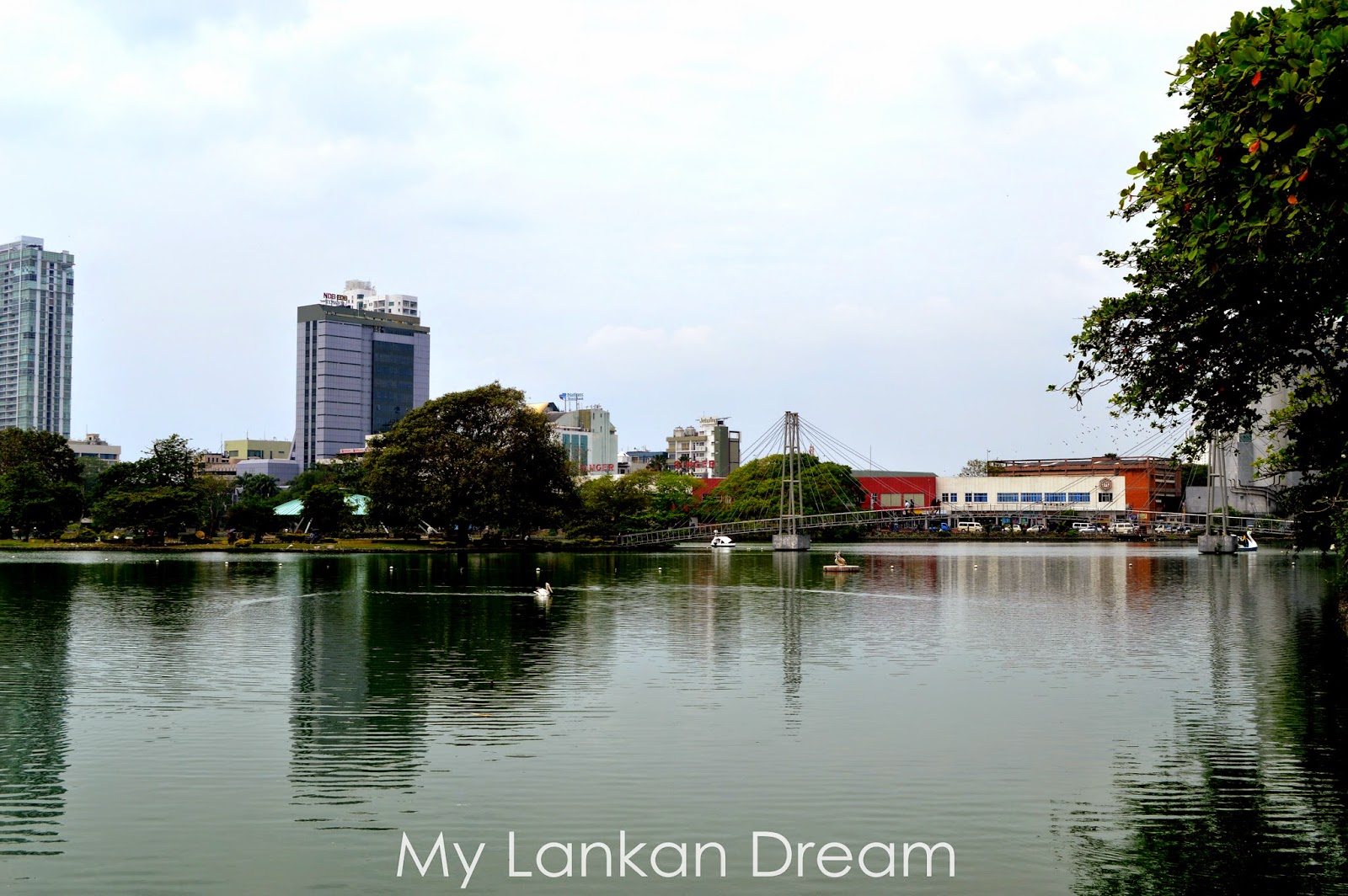
Gangaramaya Temple, Seema Malaka Temple and the Beira lake
These three are all very close to each other and are great places for photography. The two temples are very touristy though. So if what you’re looking for is to experience what a real Buddhist temple is like, look for a local area temple. My neighborhood temple, Balapokuna is lovely and peaceful in the evenings. I’d recommend going on a paddle-swan-boat on the Beira Lake to anyone though. It is a lot of fun!

Buddha Statues inside the Gangaramaya Temple

The Seema Malaka Temple

The Beira Lake


Viharamahadevi Park
This large Park opposite the Town Hall Building and next to the Museum is a scenic place to take a casual stroll or even for a work out in the evenings.

One side of Viharamahadevi Park

Galle Face Green, Galle Buck Lighthouse and Sambodhi Chaithya
This is a must-do in my opinion, not during the day though because of the heat. The best time to go is in the early evening to watch the sunset and then stick around for all kinds of street food. Be warned though, it’s not for the ‘weak-tummied’. Weekends and public holidays are better because there’s a crowd of people flying kites and playing games on the green.

Galle Face Green

Towards the North of Galle Face Green, close to the Kingsbury Hotel is the Galle Buck Lighthouse. It’s a quiet spot to watch the sunset from.

The Galle Buck Lighthouse

Wander a little further down the road and you’ll see the Sambodhi Chaithya which is a temple built above the road on two arches. Climb 11 levels and 300 steps and you come to the entrance of the charming temple and get a great view of Colombo city.

The Sambodhi Chaithya

St. lucia’s cathedral
One of the most beautiful cathedrals in Sri Lanka, St. Lucia’s is definitely worth 
a visit.


Wolvendaal church
A masterpiece of Dutch architecture, Wolvendaal Church should be added to your list of places to visit in Colombo. With its thick walls and high arched ceiling, this building from 1757 was built to last and is full of history.

The organ inside Wolvendall Church

Independence square
This too would have fallen into the ‘drive by’ category a few years back. However now, the grounds around Independence Square have been developed into a park where many healthy people exercise in the evenings. There’s a museum under the building that’s worth checking out as well.


Sri Kailawasanthan Swami Devasthanam Kovil
This Hindu Kovil is an ideal place to soak in some culture and marvel at the sculptures as well as the rituals.


Thursday, 13 March 2014

Religions in Sri Lanka: Part 4 - Christianity

When someone asks me what religion I am, I usually respond with my well-rehearsed line ‘I’m half and half’. On paper, I am a Buddhist… It is the religion I studied in school and the one I know most about. My Father is a Buddhist and my Mother is a Christian, so in reality I follow both religions. I pray in churches and temples [and Kovils too – Come to think of it, my answer should be that I’m multi-religious!] and my family and I celebrate Vesak, a Buddhist festival, as well as Christmas. This time around, the fourth and final addition to my four part blog on religions is on Christianity in Sri Lanka.

Christianity was said to have first been introduced to Sri Lanka in the 1st century when Thomas the Apostle arrived in Sri Lanka. After this, it was believed that there were a few Christian settlements along the coastline. The reach of Christianity [Roman Catholicism] grew when the country was under the Portuguese rule in 1505. When the Dutch took over Sri Lanka in the 17th century, this number grew further to bring the country’s Christian population to over 20%. Most other branches of Christianity, including Anglican and Protestant etc were introduced to the country with the British rule in the late 1700’s. In the present day, according to the census conducted in 2012, only around 6% of the Sri Lanka’s population are Christians.

In contrast to the other religions in Sri Lanka, where Buddhists are almost all Sinhalese, Hindu’s are almost all Tamils and Islamists are almost all Muslims, Christians include members of both the Sinhalese and Tamil ethnic groups.

There are many beautiful old churches and cathedrals spread out across the country that were made during and after the Portuguese, Dutch and British rule. One of these is the Wolvendaal Church in Pettah [Colombo]. The Dutch name Wolvendaal meaning ‘Wolf’s Dale’ was given to the church because of the jackals that roamed the area at the time of the church being built in 1749. The design of the church is very typically Dutch and the walls are 1.5 meters thick! The old carved ebony chairs are another unique feature of this enchanting church.
 
The Wolvendaal Church

Another two popular churches in Colombo are the St. Anthony’s Church in Kochchikade and St. Lucia’s Cathedral in Kotahena. The St.Anthony’s church started off as a little chapel made out of mud. Today, in the heart of Colombo, this church attracts thousands of devotees from all walks of life. St. Lucia’s Cathedral too started off as a small chapel on a hill built by the Dutch. In the 1880’s, construction was underway to make this cathedral that is a replica of the St. Peter’s Basilica in the Vatican. It is the seat of the Archbishop of the Roman Catholic Archdiocese of Colombo.

St. Lucia's Cathedral


There are two popular old churches in Galle as well; the Dutch Reformed Church and the All Saints Anglican Church, both inside the Galle Fort. The Dutch Reformed Church was built in 1640 and was later remodelled in 1752. It is home to a magnificent vintage organ from 1760 and the church is paved with grave stones from the Old Dutch cemetery. The All Saints Church was built much later in 1971.

The keyboard of the Vintage Organ at the Dutch Reformed Church.

Most Christian festivals like Christmas and Easter are celebrated in Sri Lanka in a big way. Even non-Christians often celebrate and become a part of the festivals. There has been a lot of influence from Christianity in the Sri Lankan Culture.

This brings my four part blog on Religions in Sri Lanka to a close. They have been the hardest for me to write and they have also taken the most amount of research. Sri Lanka is a very religious country, whether we are Buddhists, Hindus, Islamists or Christians, we are very spiritual and devoted to the religions we follow. Therefore, each religion has embedded itself as a part of our culture and our culture has influenced some of the religious traditions followed as well.